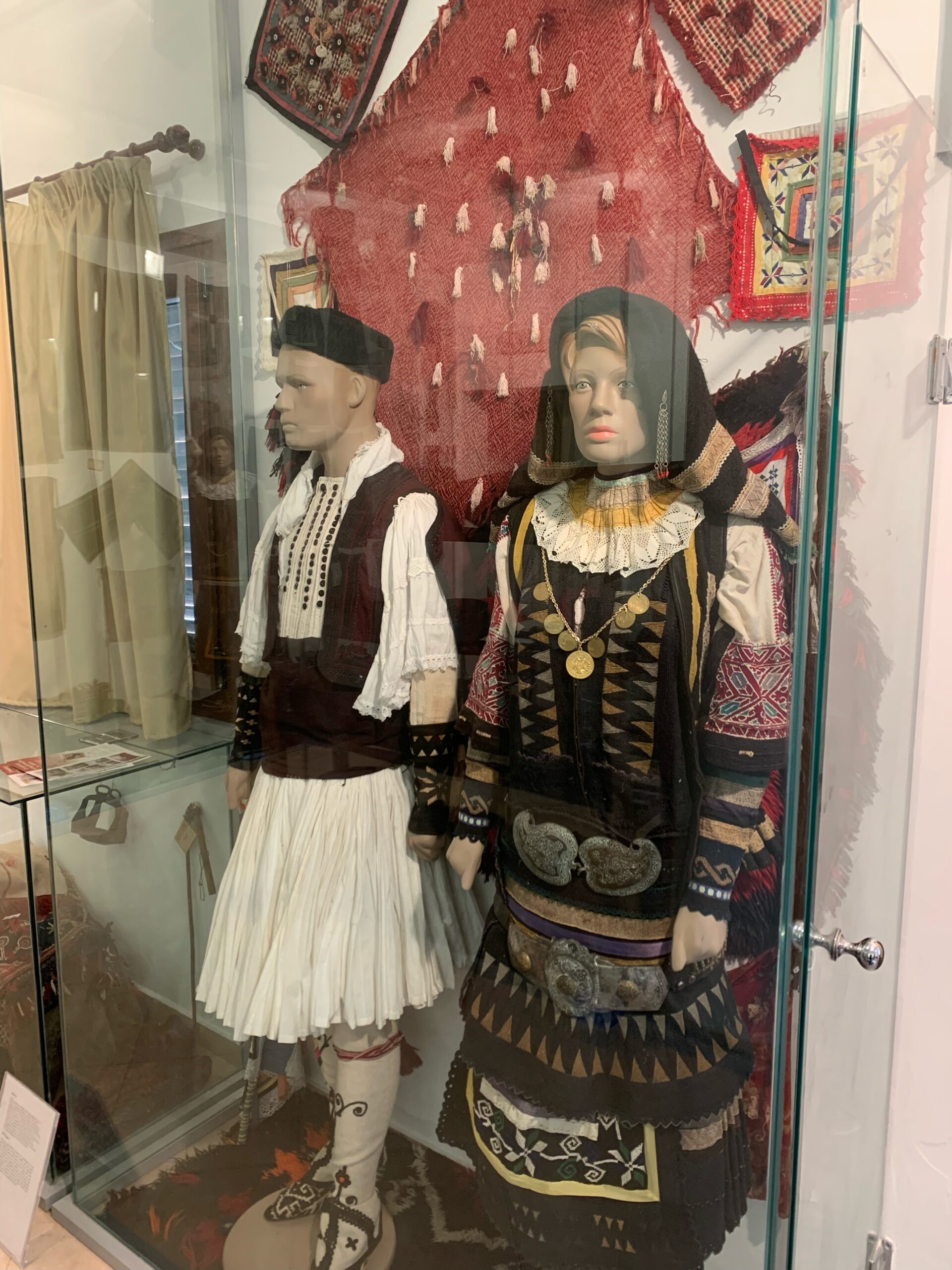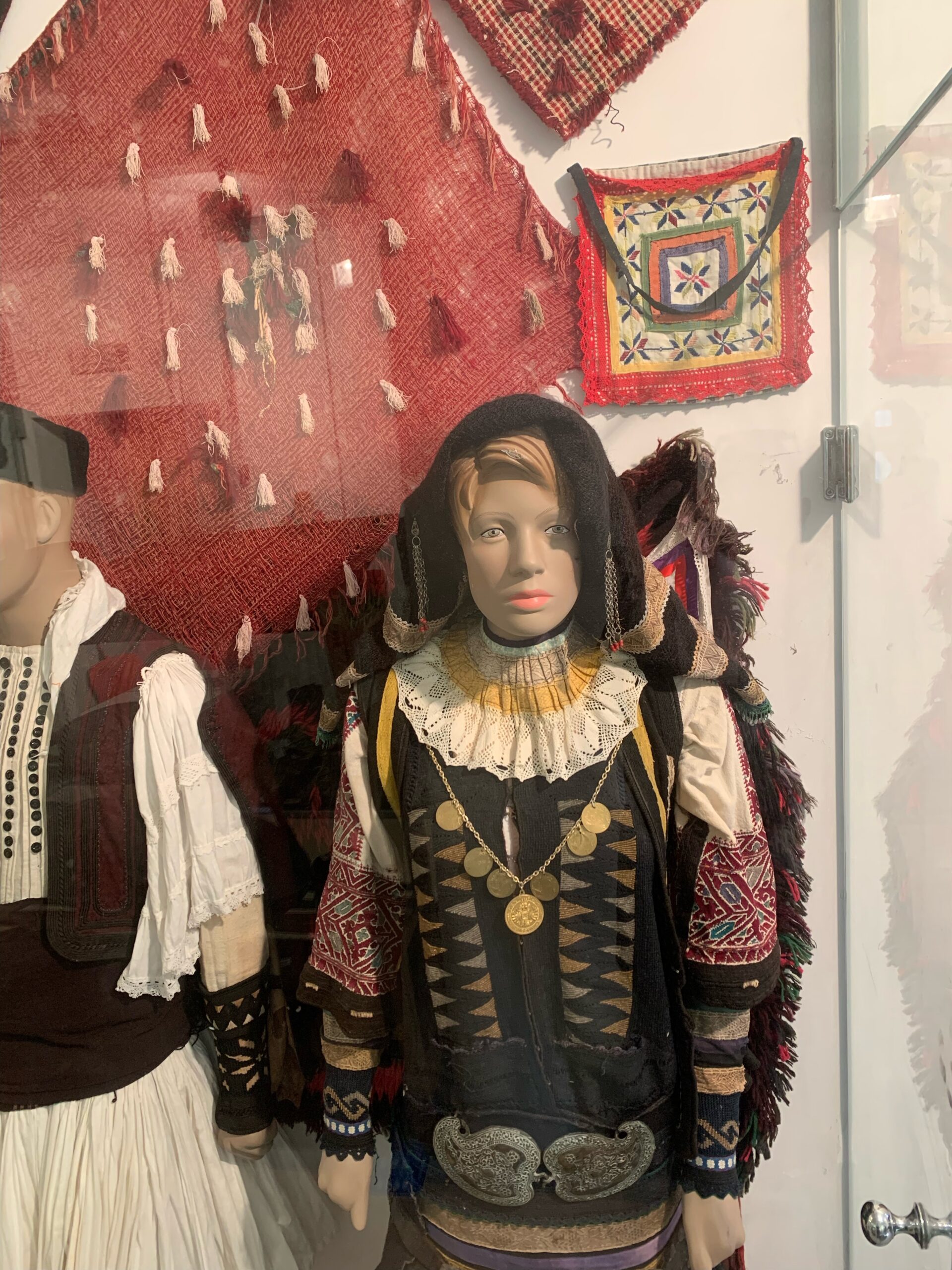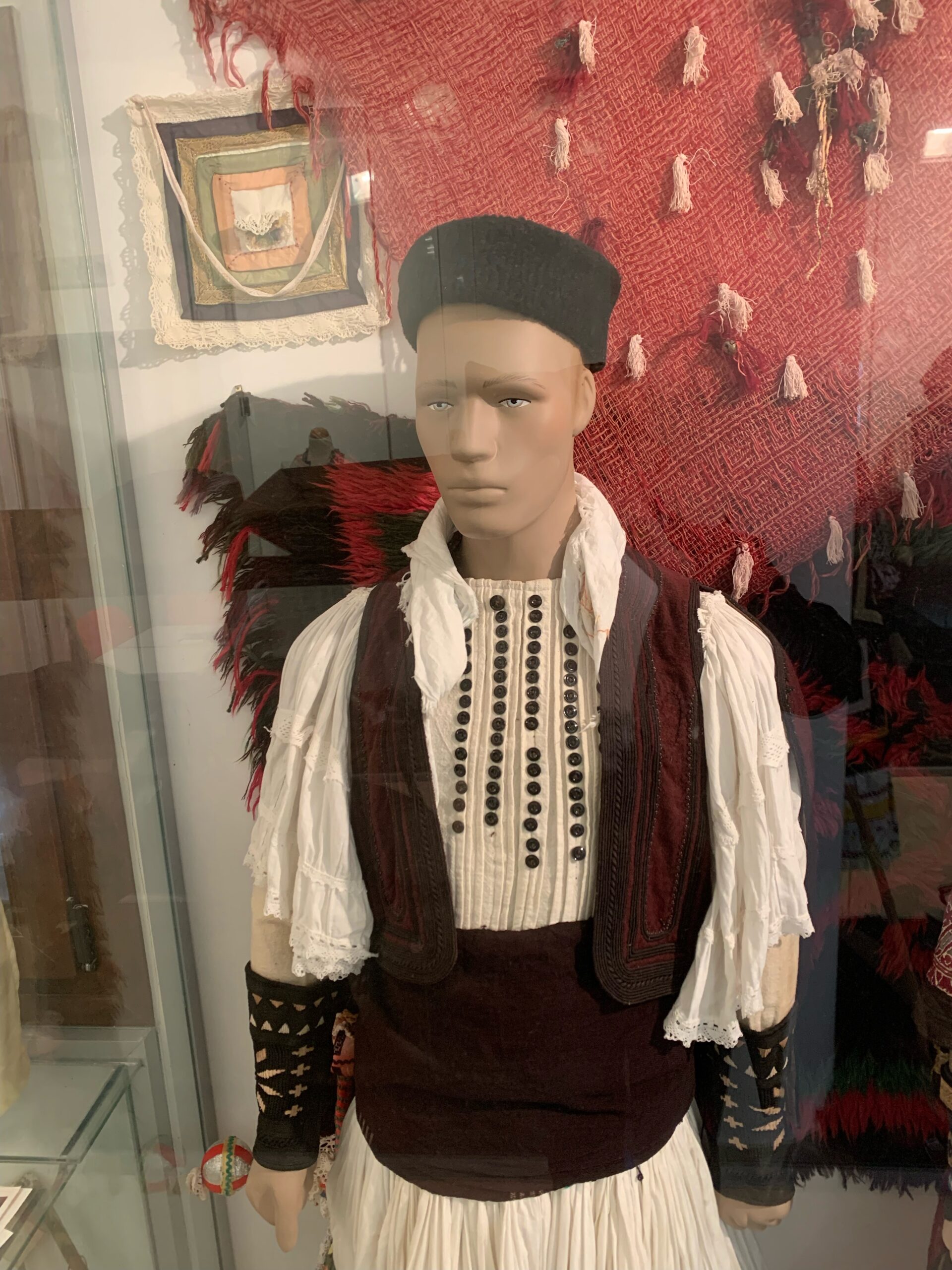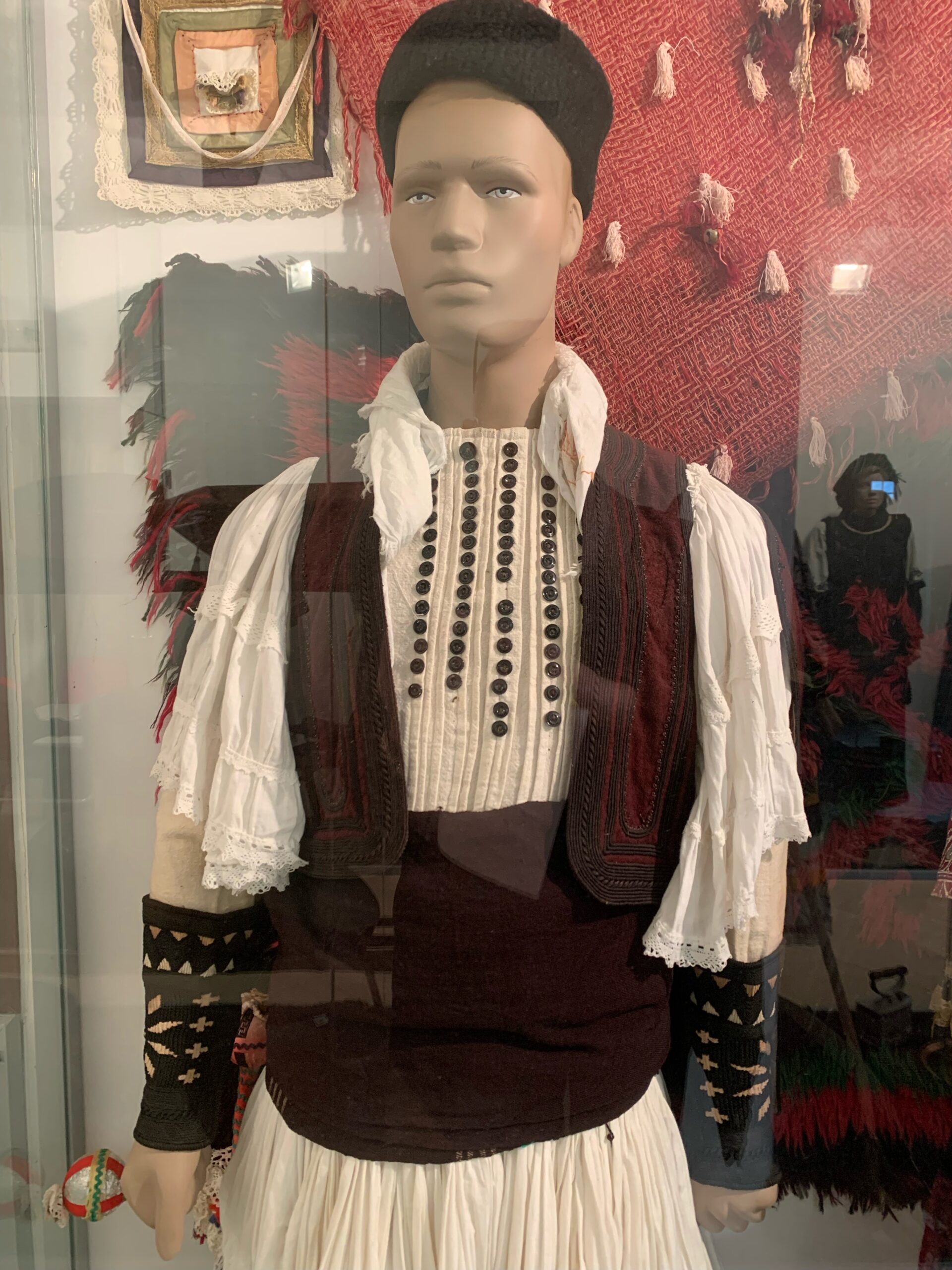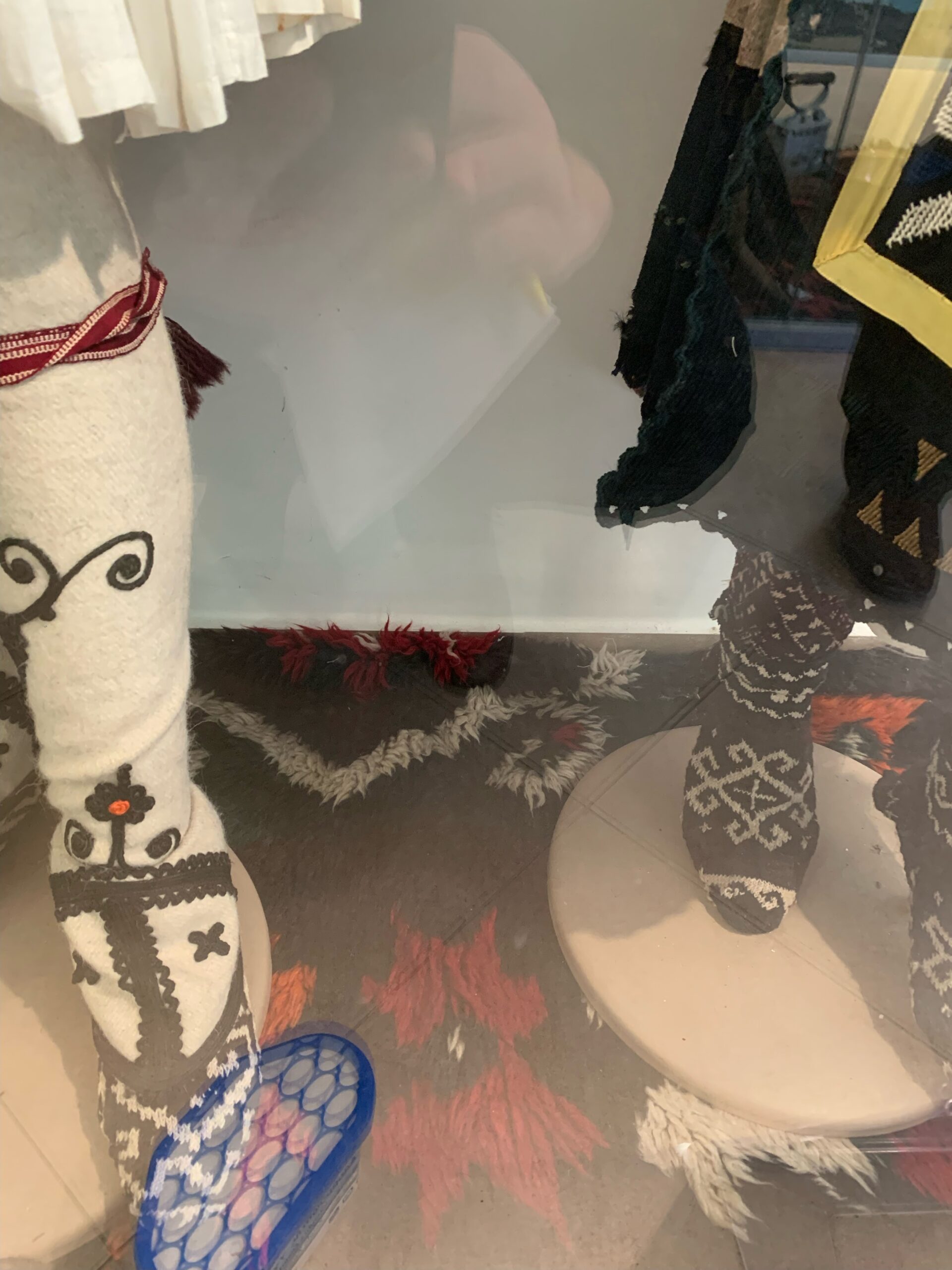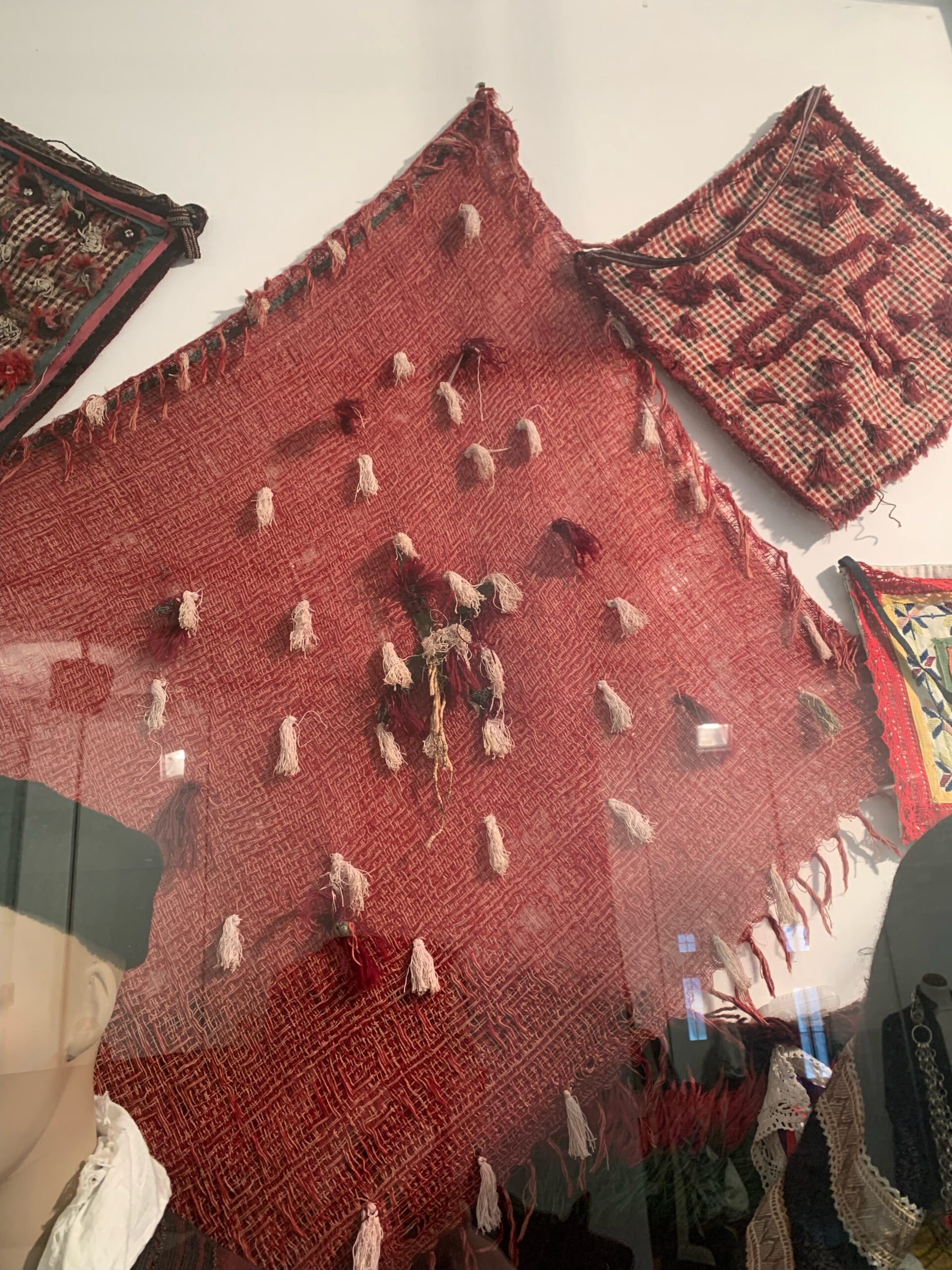
Είναι η βιτρίνα όπου είναι τοποθετημένα αντικείμενα τα οποία σχετίζονται και χρησιμοποιούσαν στο γάμο.
Πίσω διακρίνονται οι κουλουροτροβάδες στολισμένοι με φούντες κόκκινες, όπως επίσης στη μέση βλέπουμε έναν πορφυρού χρώματος του Βυζαντίου(1900) φλάμπουρα, και αριστερά και δεξιά τα σακουλάκια για τα καλούδια.
Κάτω από τον φλάμπουρα αυτό βλέπουμε την γαμπροβέλεντζα ή καρπέτα, την οποία στην χρησιμοποιούσαν για στρωσίδι στη σέλα του γαμπρού, όπως και το μαντήλι που έβαζε ο πεθερός (πατέρας της νύφης) στον φλάμπουρα.
In the first show case, placed at the Museum entrance, we can see the costumes of the bride and the groom. Here are placed items related to and used in a wedding. Behind them there are the "koulourotrovades" (bags for carrying the wedding bread) adorned with red bobbles; in the middle we can view a "flampoura" (banner made in weddings to represent the joy of the occasion, par excellence emblem of Sarakatsani) of deep red colour dated from Byzantium (1900), and on the right and left there are the sachets for the "kaloudia" (treats). Beneath this "flampoura" we can see the "gamprovelentza" (bocking of the groom) or "karpeta", which was placed as bedding over the horse saddle, as well as the "mantili" (handkerchief) that the father-in-law (father of the bride) used to put on the flampoura.
At the bottom of the show case there are placed three other kinds of flampoura, one of which is the museum's emblem, as shown in our website.
Dans la première vitrine, placée à l'entrée du Musée, on peut voir les costumes des mariés. Voici des objets placés liés et utilisés lors d’un mariage. Derrière eux se trouvent les « koulourotrovades » (sacs pour transporter le pain de noce) ornés de pompons rouges ; au milieu on peut voir une "flampoura" (bannière fabriquée lors des mariages pour représenter la joie de l'occasion, emblème par excellence de Sarakatsani) de couleur rouge foncé datée de Byzance (1900), et à droite et à gauche se trouvent les sachets pour les "kaloudia" (friandises). Sous cette « flamboura », on peut voir la « gamprovelentza » (bocking du marié) ou « karpeta », qui était placée comme literie sur la selle du cheval, ainsi que le « mantili » (mouchoir) que le beau-père (père de la mariée) mettait la flamboura.