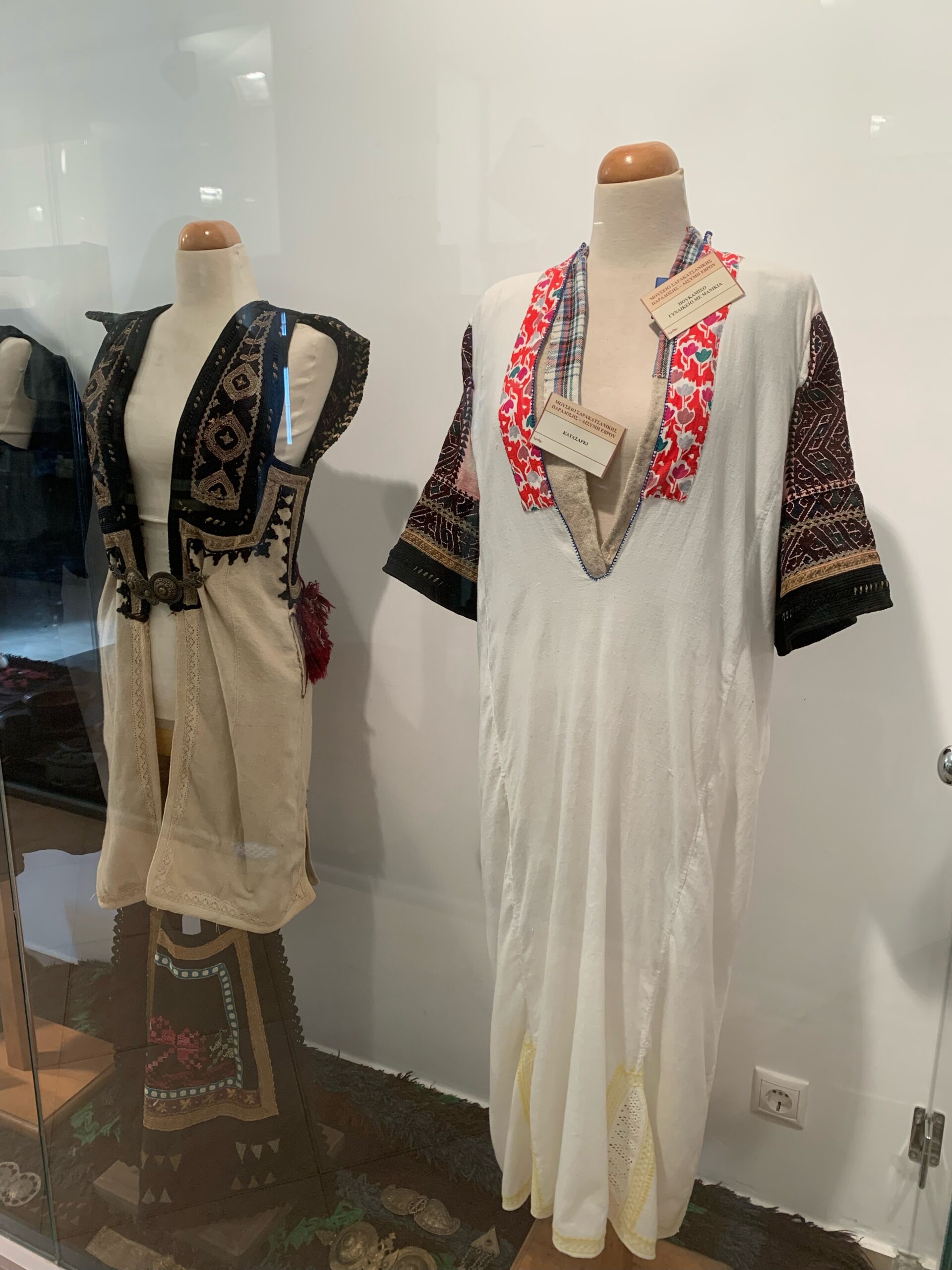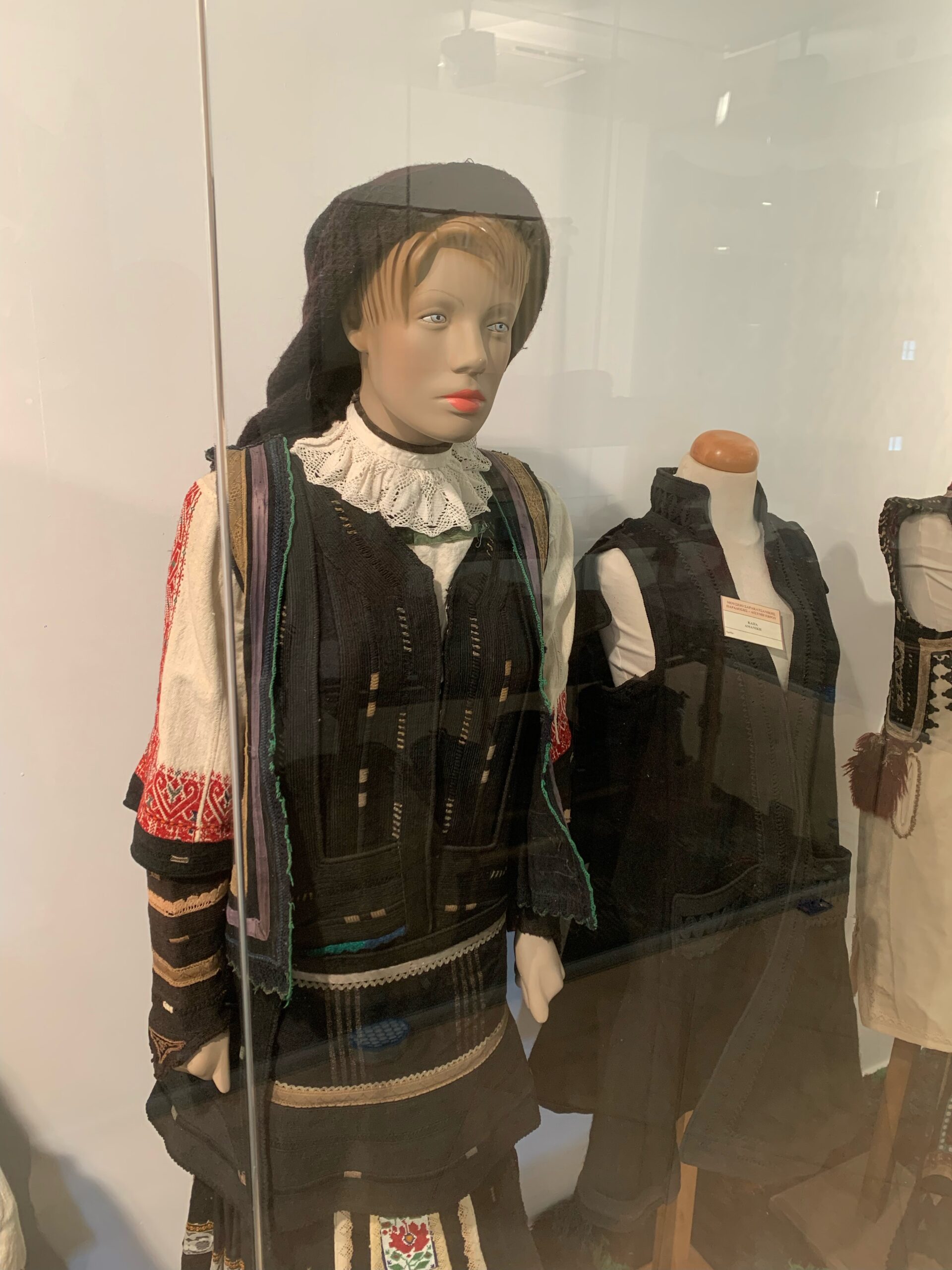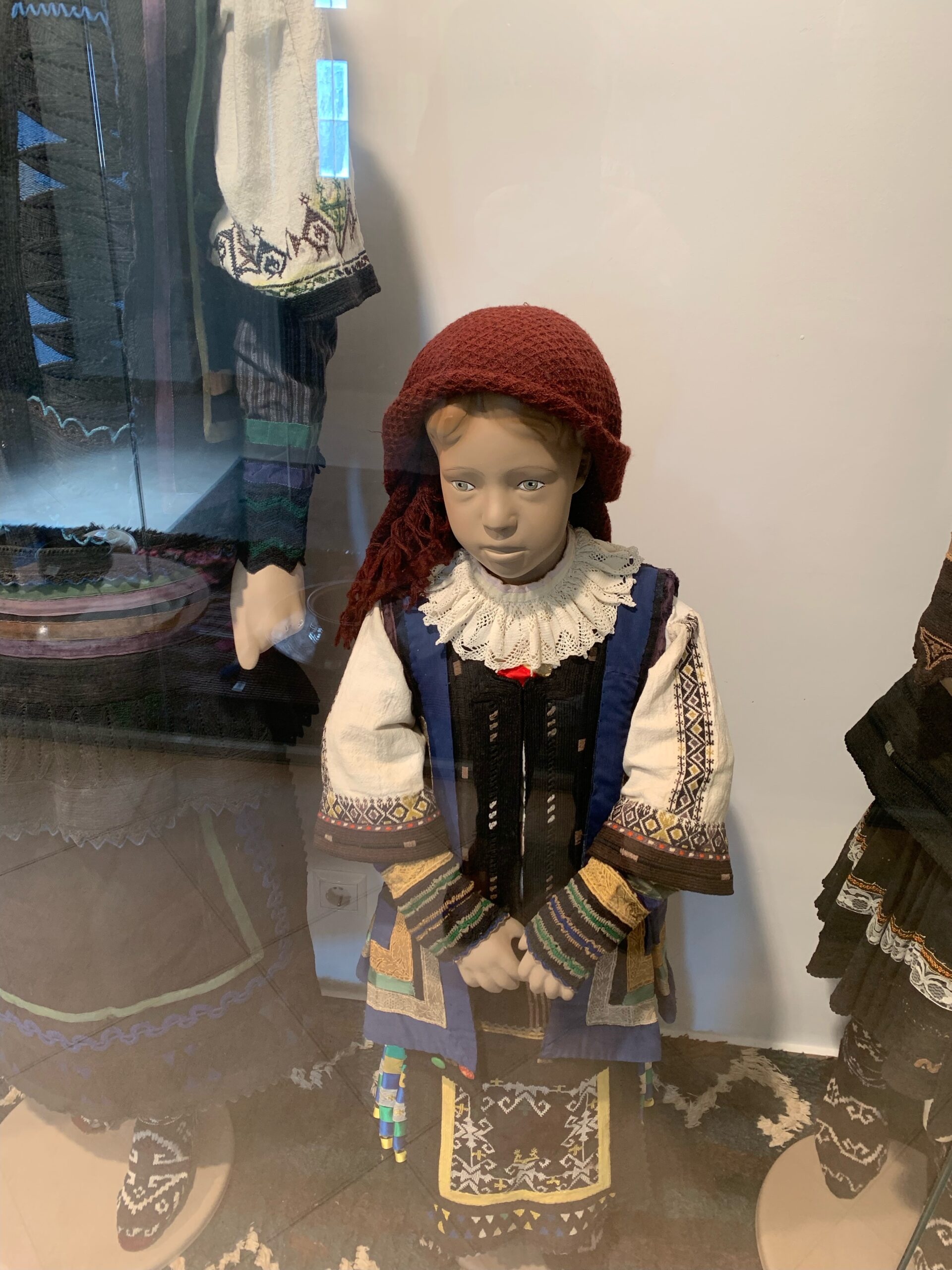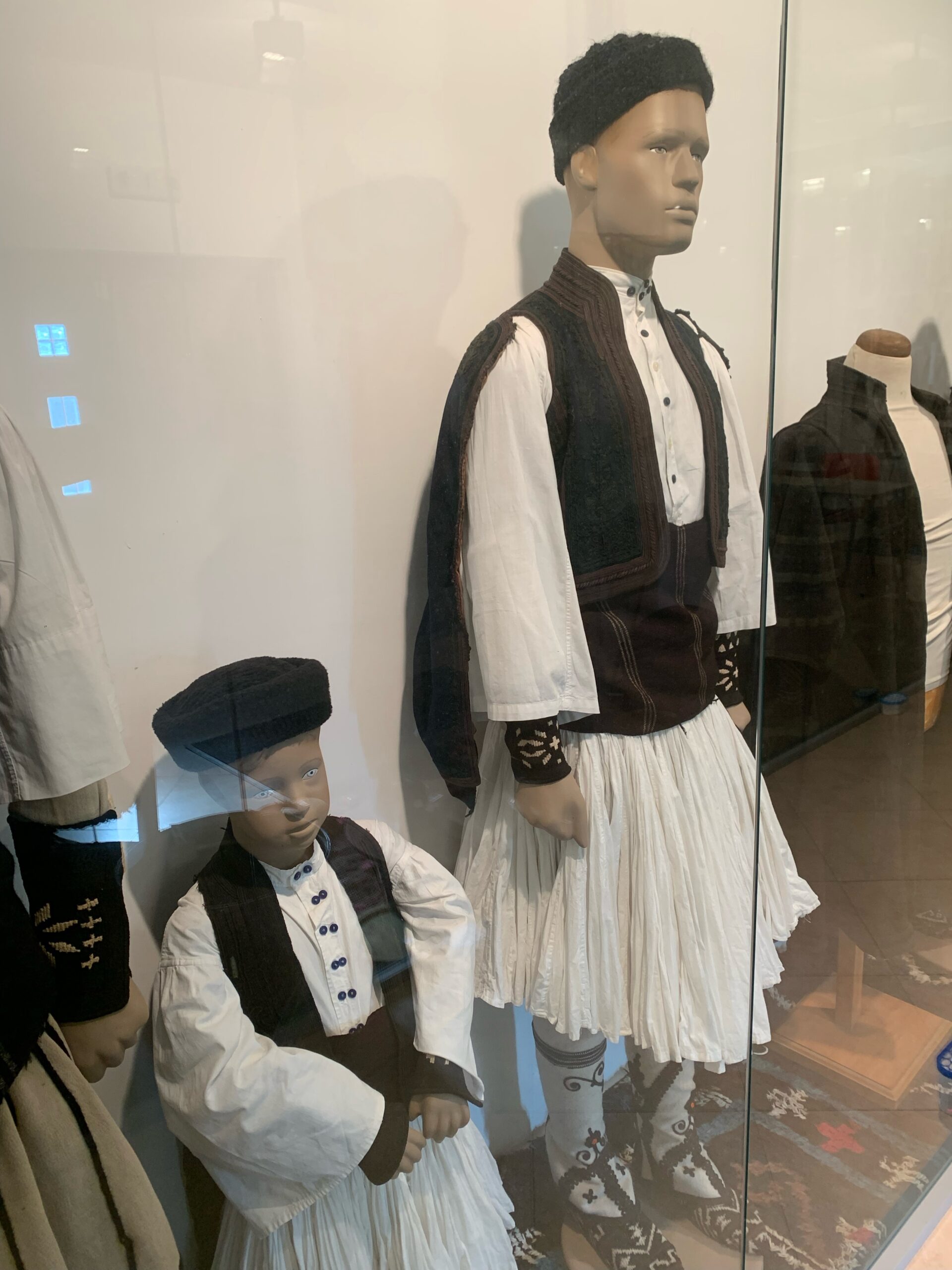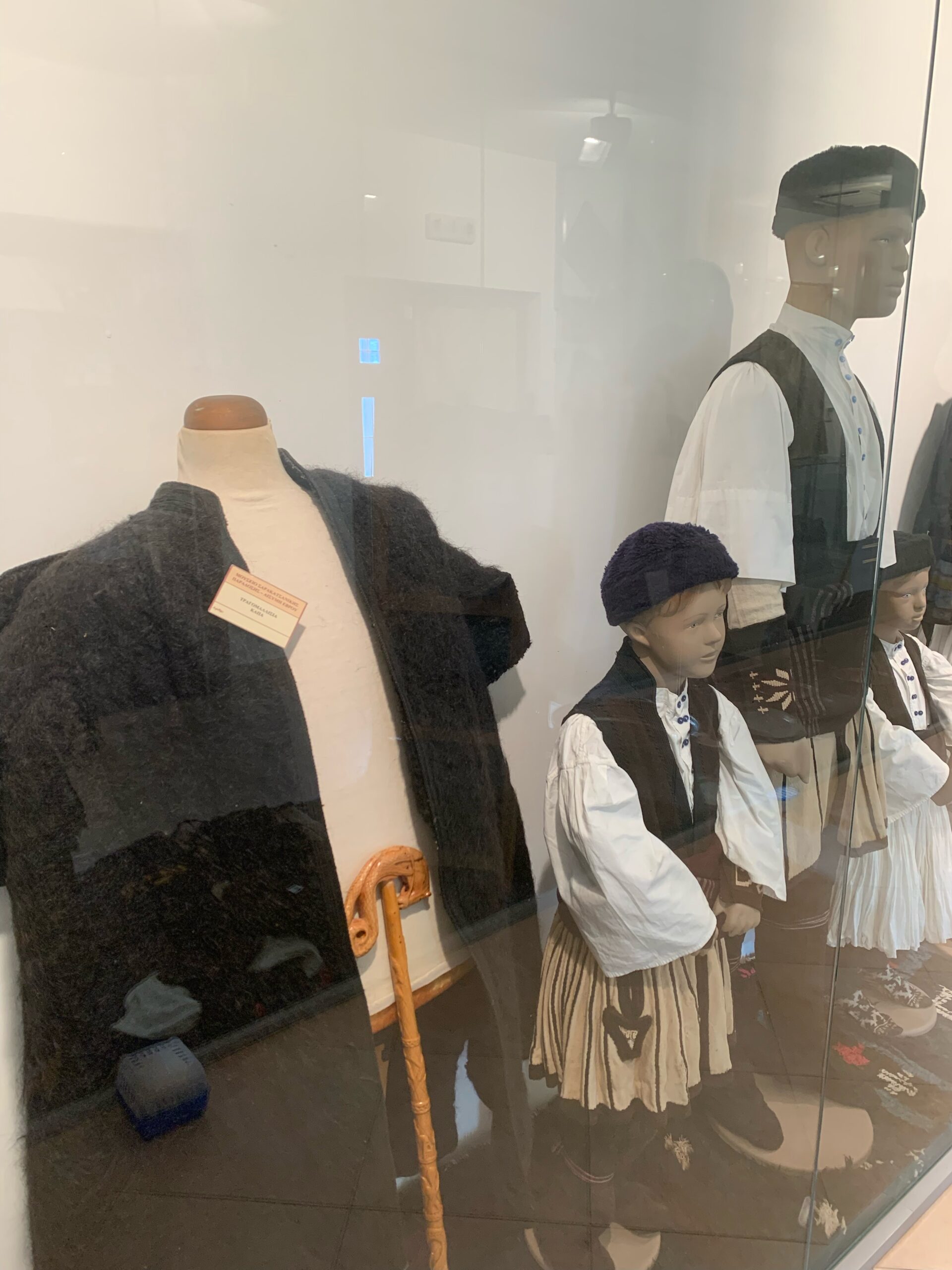
Στη βιτρίνα αυτή βρίσκεται η φορεσιά μια μικρής Σαρακατσάνας, με το τσαμαντάνι, τη φούστα, το ζωνάρι, την μπόλκα, την τραχλιά ή πετσέτα, το πουκάμισο που ξεχωρίζει κάτω από την φούστα, την ποδιά, αλλά και τα χειρότια (τα γυναικεία ζγαρόνια). Στο κεφάλι φοράει τον μπόχο
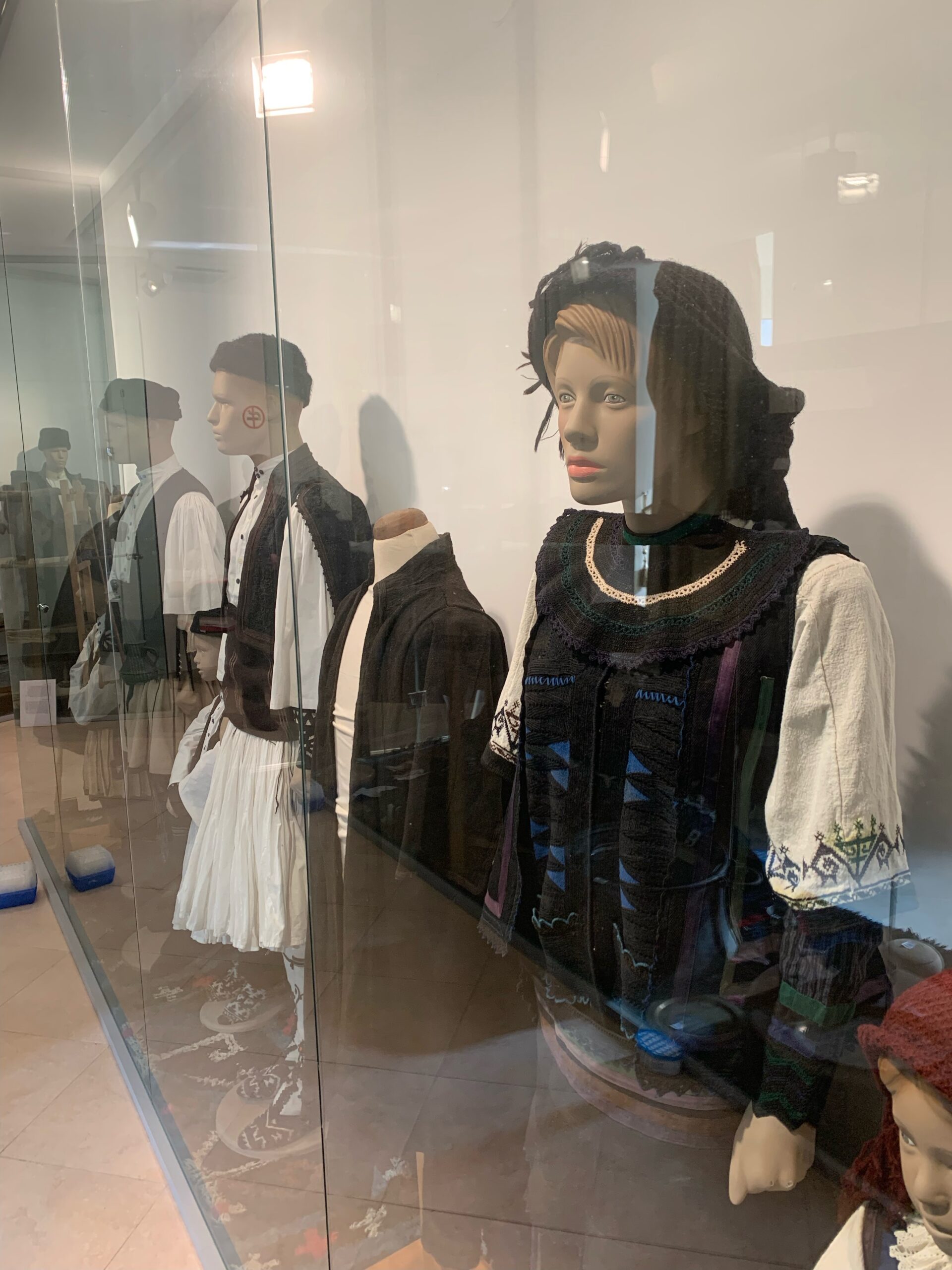
Επίσης διακρίνονται οι ανδρικές και γυναικείες Σαρακατσάνικες φορεσιές. Η φουστανέλα , το Σιγκούνι, Η Τραγομαλλίσια κάπα, αλλά και η Λεχώνα με την σκούρα στολή της, και το αγόρι με το σιγκούνι. Παρατηρούμε τα όπλα, τις κλίτσες, τα γκουζόκια, το γυναικείο πανωφόρι, ενδύματα που φορούσαν οι Σαρακατσάνοι και οι Σαρακατσάνες στην καθημερινή ζωή αλλά και στις επίσημες στιγμές τους, όπως ήταν ο γάμος .
In this show case is placed the costume of the young Sarakatsana, with the "tsamantani" (kind of vest), the skirt, the belt, the "bolka" (jacket), the "trahlia" or towel, the shirt distinguished beneath the skirt, the apron, as well as the "hirotia" (women's gloves). On the head she wears the boho (woven head-dress). In addition, there are seen the male and female Sarakatsani costumes. The fustanella (a kind of Greek kilt), the sigkouni (daily male costume), the tragomallisia (billy-goat wool) cloak, and the Lehona (woman recently given birth) with her dark costume, and the boy with the sigkouni. We can also see the guns, "klitses" (sheep hooks), "gkouzokia", female coat, clothes worn by Sarakatsani in everyday life and in official moments, such as a wedding.
Dans cette vitrine est placé le costume du jeune Sarakatsana, avec le "tsamantani" (sorte de gilet), la jupe, la ceinture, la "bolka" (veste), la "trahlia" ou serviette, la chemise distinguée sous le la jupe, le tablier, ainsi que les « hirotia » (gants pour femmes). Sur la tête elle porte le boho (coiffe tissée). De plus, on y voit les costumes Sarakatsani masculins et féminins. La fustanella (sorte de kilt grec), le sigkouni (costume quotidien masculin), le manteau tragomallisia (laine de bouc), et la Lehona (femme récemment accouchée) avec son costume sombre, et le garçon avec le sigkouni. On peut également voir les fusils, les « klitses » (crochets à mouton), les « gkouzokia », manteau féminin, vêtements portés par Sarakatsani dans la vie quotidienne et dans les moments officiels, comme un mariage.