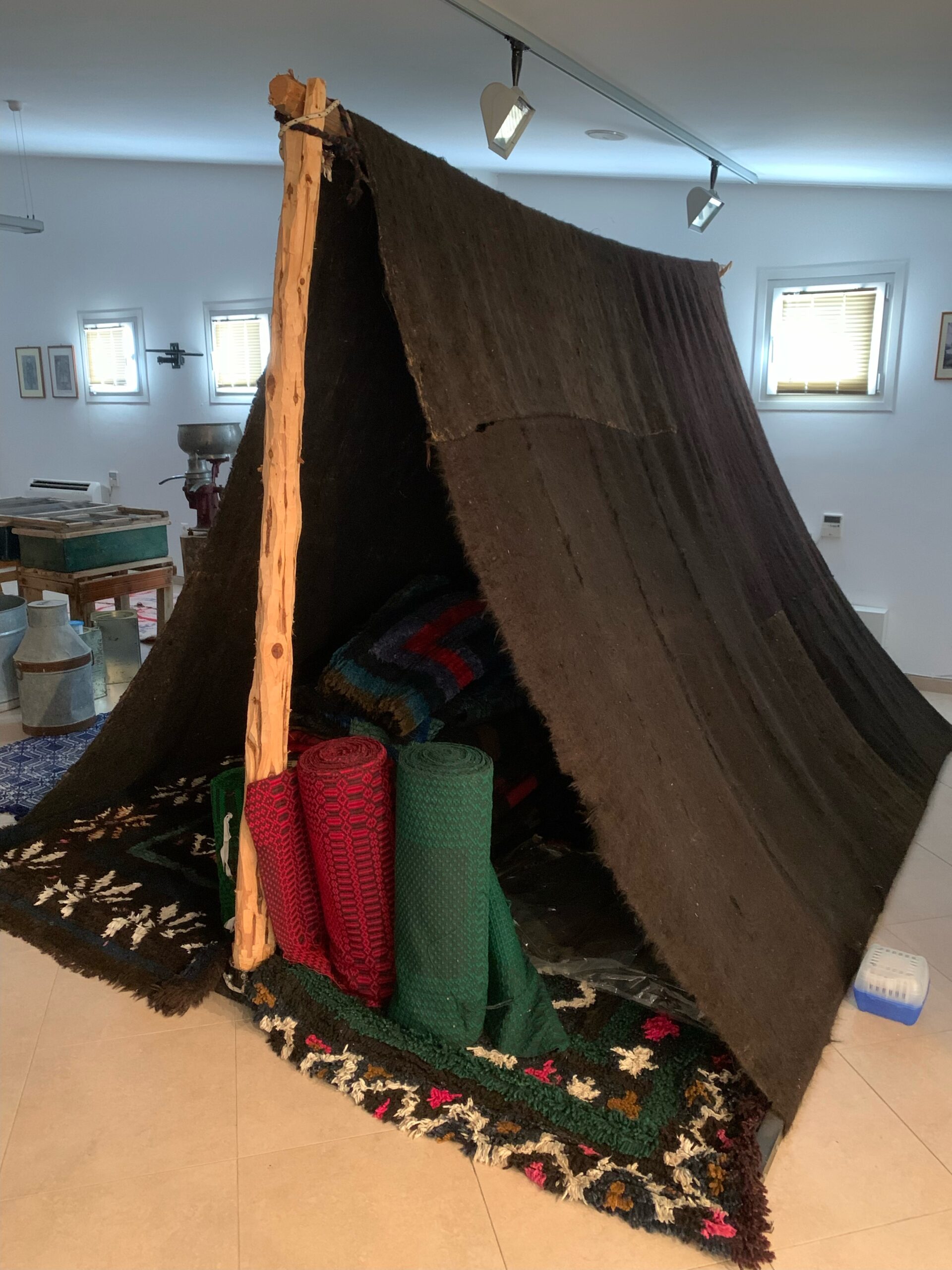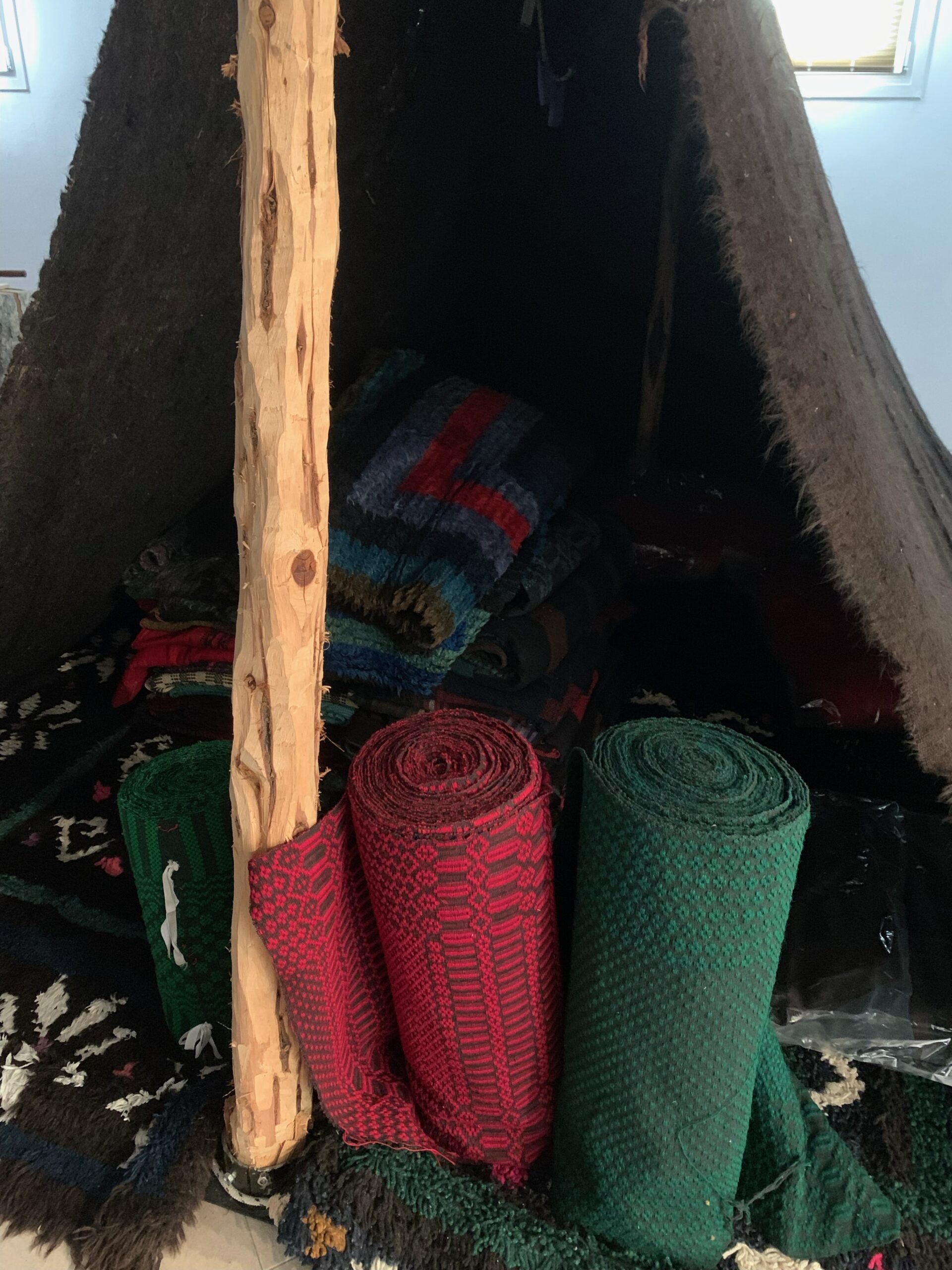
Δίπλα στην βιτρίνα βρίσκεται η ‘’ΤΣΙΑΤΟΥΡΑ’’.
Είναι πρόχειρο κατάλυμα καλυμμένο με υφαντό χονδρό, από κατσικίσιο μαλλί, (όμοιο με την κατασκευή της ‘’ΚΑΠΑΣ’’, όπου διέμεναν με όλα τα υπάρχοντά τους κατά το διάβα (διαδρομή) από τα χειμαδιά στα Ξεκαλοκαιριά και το αντίστροφο το καλοκαίρι. Κατά την διαδρομή τα ζωντανά τους και οι ίδιοι ήταν πεζοί τα δε υπάρχοντά τους (τροφές-ρουχισμός κλπ) φορτωμένα στα άλογα. Η διαδρομή ήταν αρκετά μεγάλη και έτσι έπρεπε να γίνουν ενδιάμεσες στάσεις και διανυκτερεύσεις. Εκεί έστηναν την Τσιατούρα και το επόμενο πρωινό τα μάζευαν για την επόμενη στάση.
Next to the show case is "CIATOURA".
It is a temporary lodging covered with coarse woven goat wool (similar to the construction of the "KAPAS", where they lived with all their belongings during the journey from the winters to Xekalokairia and vice versa in the summer. During the route their livestock and they themselves were on foot and their belongings (food-clothing etc) loaded on the horses. The route was quite long and so intermediate stops and overnight stays had to be made. There they set up Chiatura and the next morning they collected them for the next stop.
A côté de la vitrine se trouve "CIATOURA". Il s'agit d'un logement temporaire recouvert de laine de chèvre grossièrement tissée (semblable à la construction du "KAPAS", où ils vivaient avec tous leurs biens pendant le voyage depuis les hivers jusqu'à Xekalokairia et vice versa en été. Pendant le trajet, leur bétail et eux-mêmes étaient à pied et leurs affaires (nourriture, vêtements, etc.) étaient chargées sur les chevaux. Le parcours était assez long et il fallait donc faire des arrêts intermédiaires et des nuitées. Là, ils installèrent Chiatura et le lendemain matin ils les récupérèrent pour le voyage. prochain arrêt.