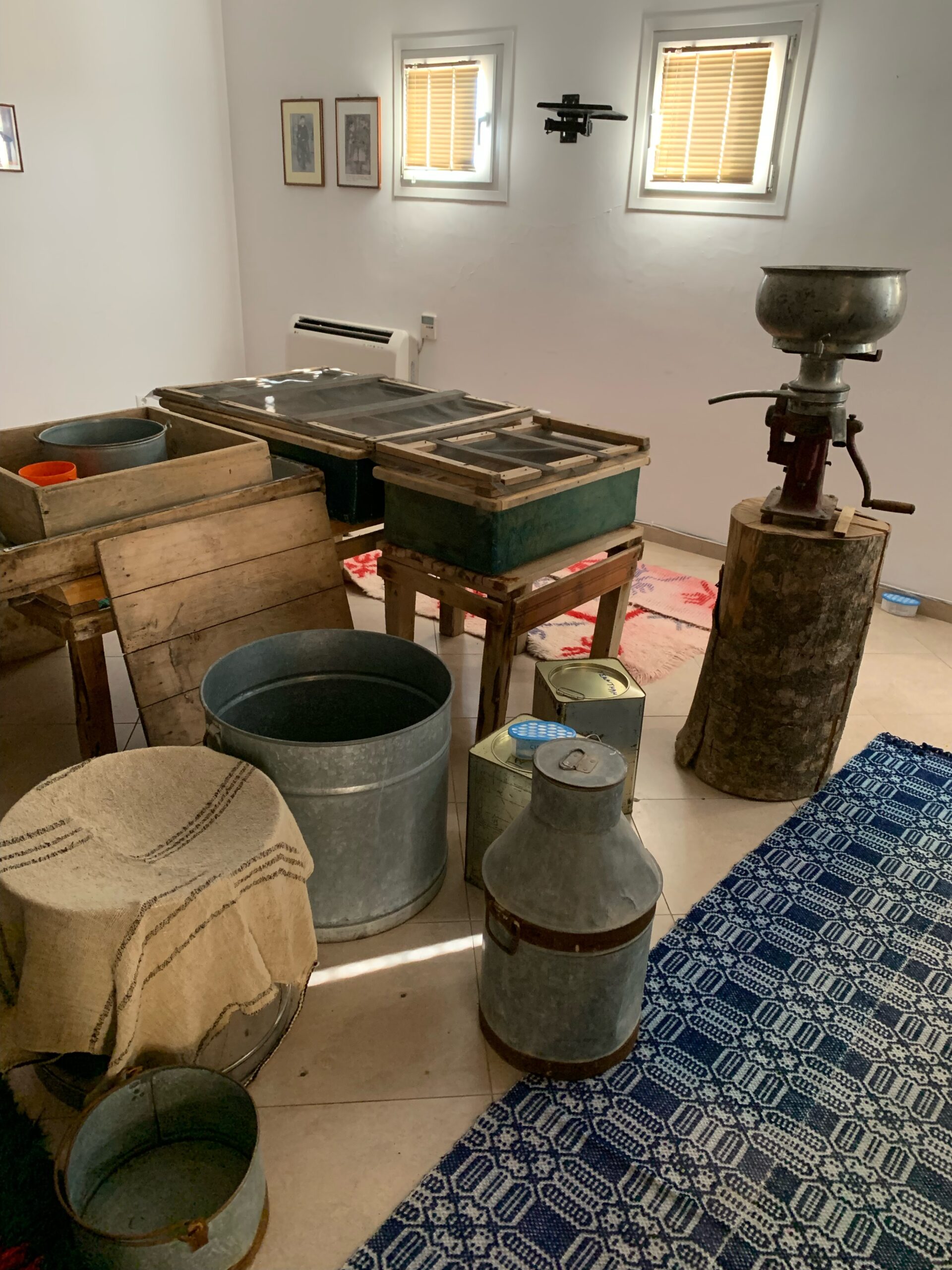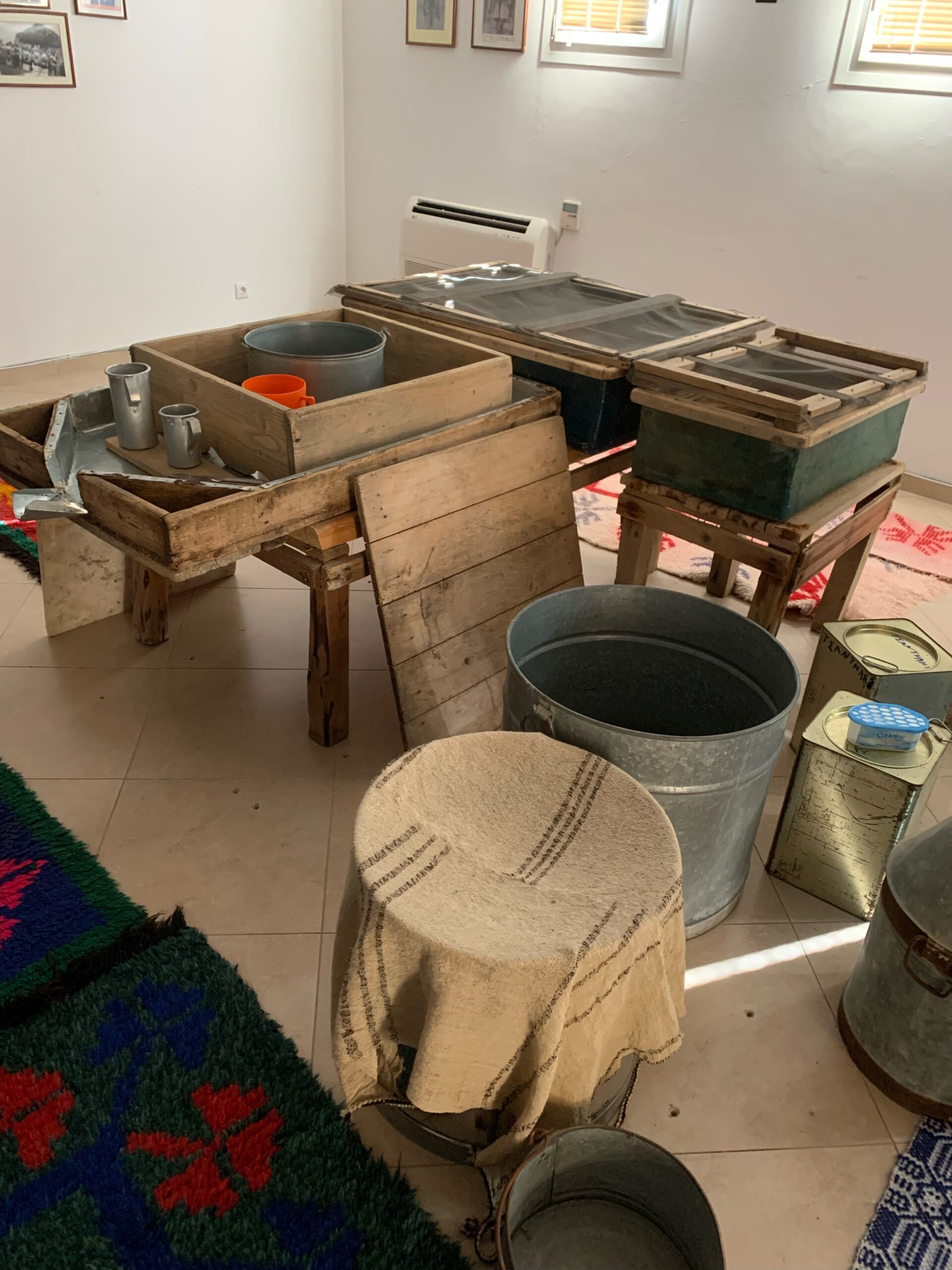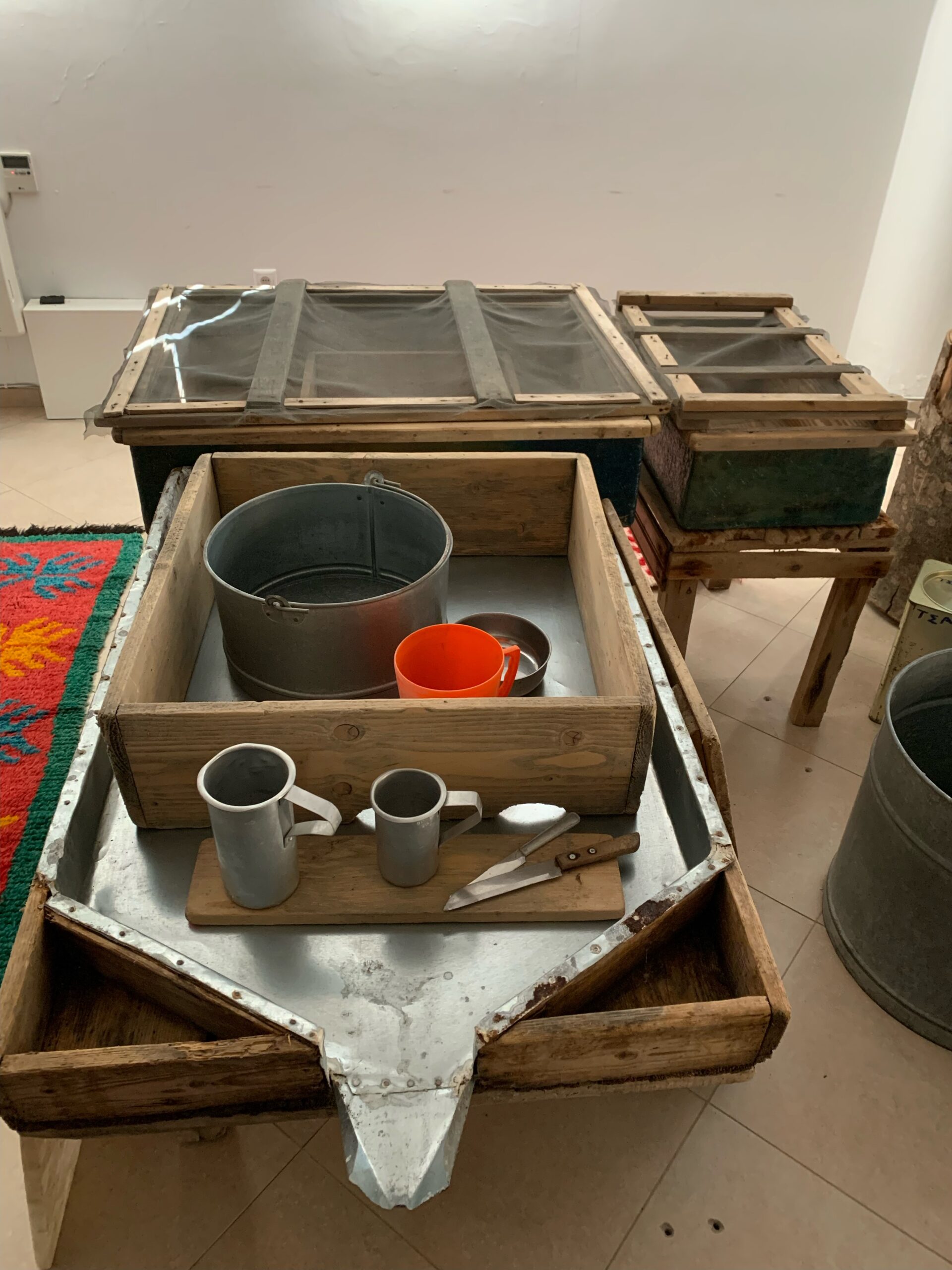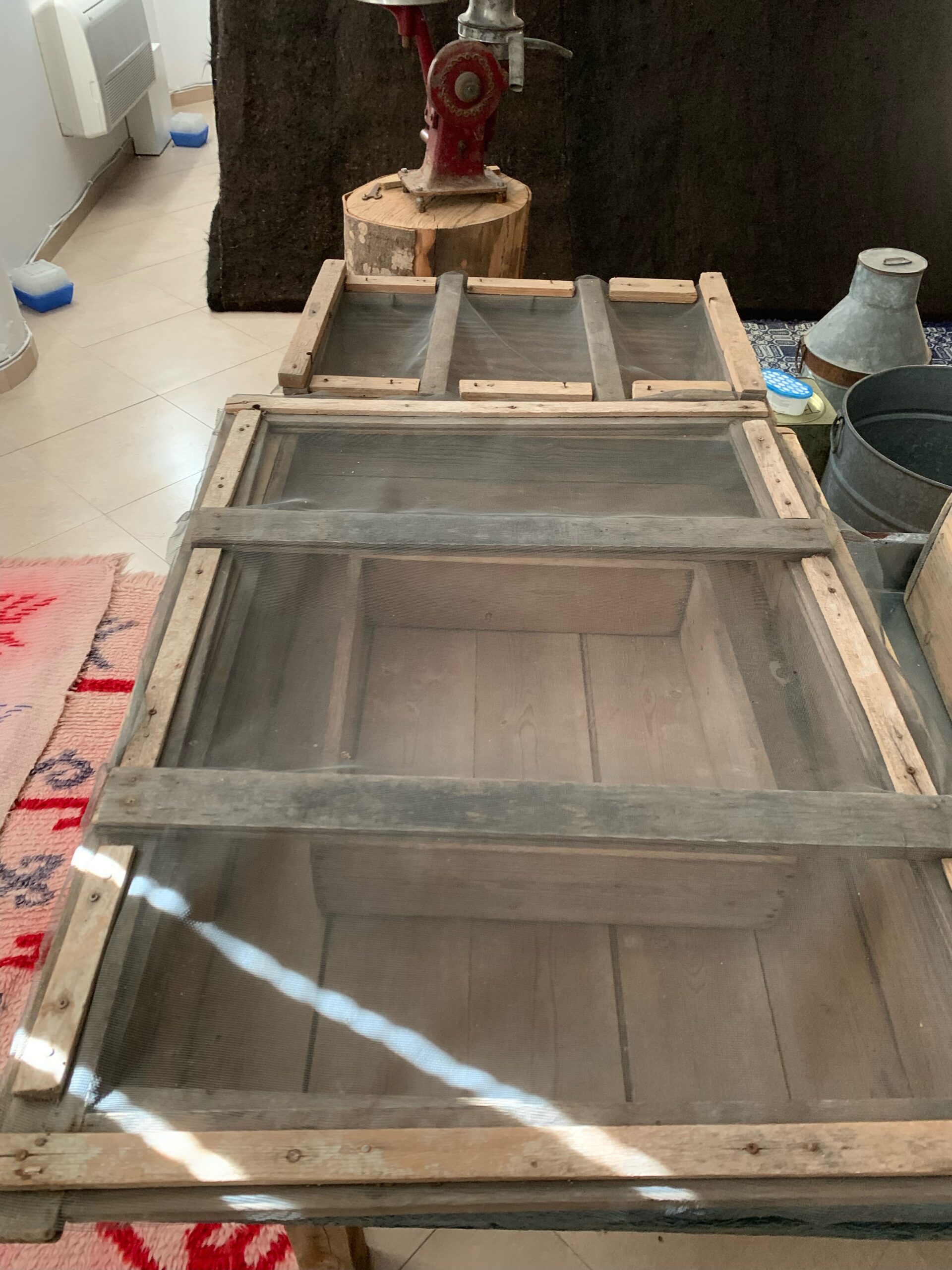
Δίπλα στην βιτρίνα βρίσκεται η ‘’ΤΣΙΑΤΟΥΡΑ’’.
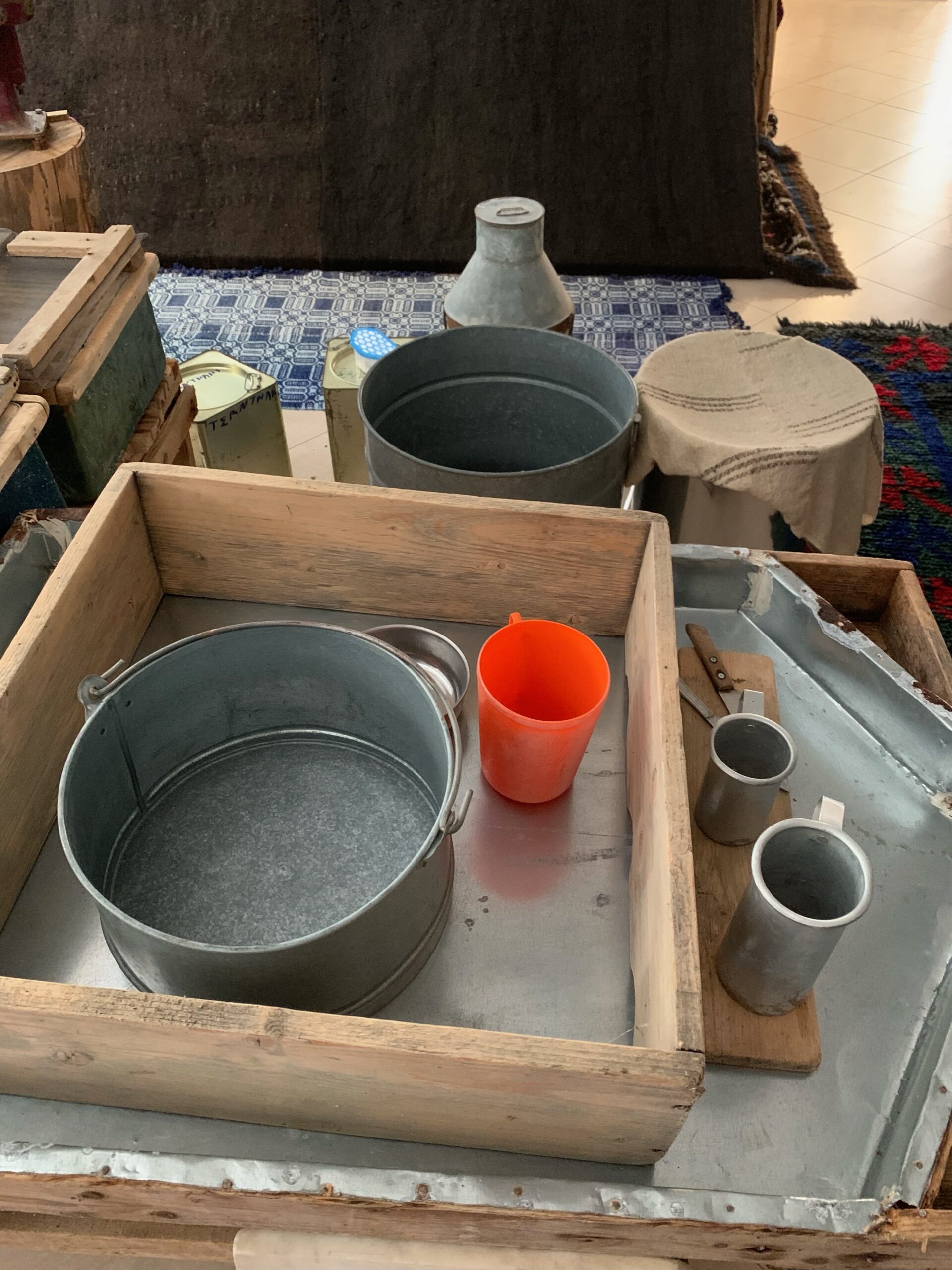
Δίπλα από την Τσιατούρα βρίσκονται όλα τα σκεύη για την παρασκευή του τυριού.
α) Τα γκιούμια με τα οποία μετέφεραν το γάλα από τον χώρο αρμέγματος των αιγοπροβάτων (δηλ. την στρούγκα).
β) Το καζάνι όπου έριχναν το γάλα για να το πήξουν σε τυρί. Στο καζάνι έδεναν δύο τρείς τσαντήλες χειροποίητες (πανί) για να στραγγίζουν το γάλα δηλαδή να παρακρατούν τυχόν σκουπίδια ακόμα και την σκόνη.
γ) Το τηζιάκι όπου σε μια μεγάλη τσαντήλα μάζευαν το τυρί από το καζάνι για να στραγγίσει (δηλαδή να φύγει το τυρόγαλο).
δ) Δίπλα η κουπάνα όπου υπήρχε ισχυρή άλμα και έβαζαν το στραγγισμένο από το τηζιάκι τυρί για να σφύξει.
ε) Επειτα το τυρί μεταφέρονταν στα σκεύη που θα αποθηκεύονταν (δηλαδή σε δοχεία ή βαρέλια και παλαιότερα σε δέρματα αιγοπροβάτων).
Next to the Chiatoura are all the utensils for the preparation of the cheese. a) The giumias with which they transported the milk from the milking area of the goats and sheep (that is, the struga).
b) The cauldron where they poured the milk to curdle it into cheese. Two or three handmade tsantiles (cloth) were tied to the cauldron to drain the milk, that is, to retain any garbage and even dust.
c) The tiziaki where the cheese was collected from the cauldron in a large bowl to drain (that is, to remove the curd).
d) Next to the koupana where there was a strong brine and they put the cheese drained from the kettle to rise.
e) The cheese was then transferred to the containers to be stored (that is, in containers or barrels and earlier in sheep and goat skins).
Ustensiles pour faire du fromage A côté de la Chiatoura se trouvent tous les ustensiles pour la préparation du fromage. a) Les giumias avec lesquels ils transportaient le lait de la zone de traite des chèvres et des brebis (c'est-à-dire le struga). b) Le chaudron où l'on versait le lait pour le cailler en fromage. Deux ou trois tsantiles (tissus) faits à la main étaient attachés au chaudron pour évacuer le lait, c'est-à-dire pour retenir les déchets et même la poussière. c) Le tiziaki où le fromage était récupéré du chaudron dans un grand bol pour l'égoutter (c'est-à-dire pour retirer le caillé). d) À côté de la koupana où il y avait une saumure forte et ils ont mis le fromage égoutté de la bouilloire à lever. e) Le fromage était ensuite transféré dans les conteneurs pour être stocké (c'est-à-dire dans des conteneurs ou des fûts et auparavant dans des peaux de mouton et de chèvre).